The Hunger Code - Out Today!
A New Way to Think About Why We Eat

Today I’m launching my new book, The Hunger Code. It’s the fourth in a series that includes The Obesity Code, The Diabetes Code, and The Cancer Code. I’ve also co-authored several other books on fasting, longevity, and metabolic health.
I’m proud of all of them. But this one feels different. I believe it tackles a missing piece in the weight loss conversation, and that missing piece is hunger.
To understand why, it helps to go back to where this all started.
Questioning the Usual Story
Nearly ten years ago, when I wrote The Obesity Code, I asked a simple question: Why do people gain weight?
At the time, the dominant answer was simple, too simple. People gain weight because they eat too many calories. And if they eat too many calories, that’s their fault. They should just “eat less.”
But that explanation never made sense to me.
Teenage boys eat enormous amounts of food. Most don’t gain weight. Perimenopausal women often gain weight, even when their eating habits haven’t changed much. Did millions of women suddenly lose willpower at the same stage of life? Of course not.
Hormones clearly play a role. Testosterone, estrogen, insulin, cortisol, GLP-1. These are powerful biological signals. Obesity isn’t a character flaw. It’s a complex medical condition influenced by biology.
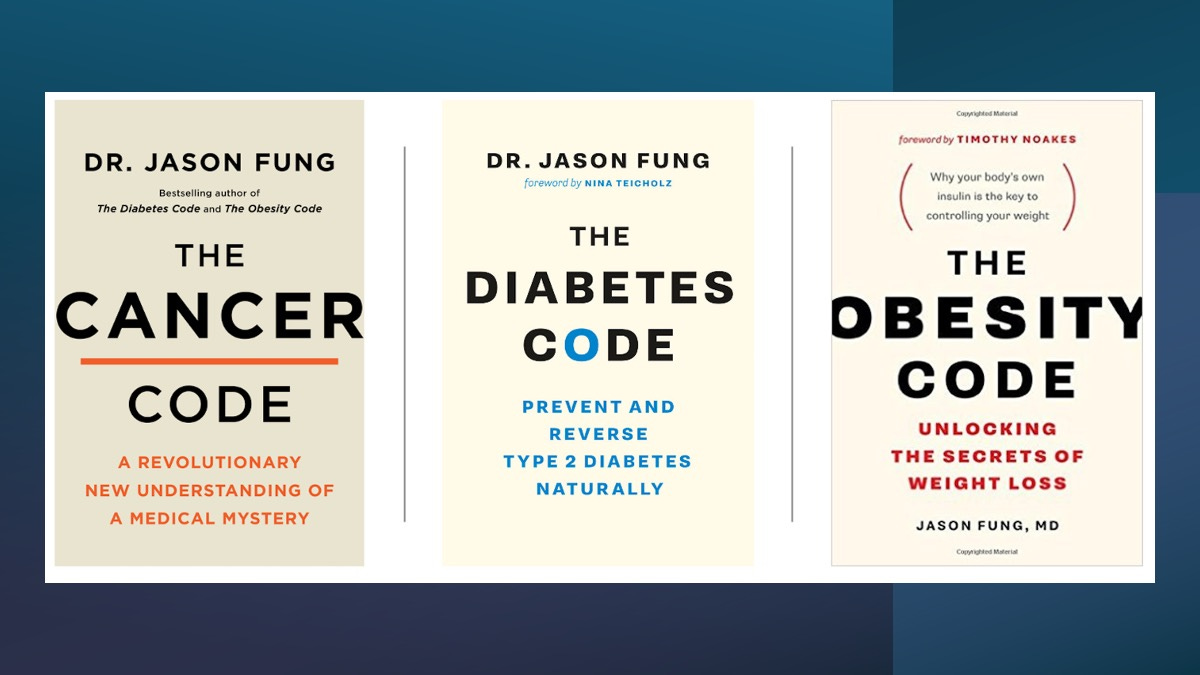
When I began speaking and writing about this, many physicians immediately understood the logic. One of those physicians told her father-in-law, the head of a Canadian publisher, Greystone Books. That fateful meeting with Rob Sanders eventually led to my books The Obesity Code and The Diabetes Code, and now The Hunger Code
Challenging Old Assumptions
The Diabetes Code, published in 2018, challenged another deeply held belief: that type 2 diabetes is chronic and inevitably gets worse. I called that one of the biggest lies in type 2 diabetes. I challenged convention treatment (drugs) to focus on diet instead as a treatment with the potential to reverse the condition.
At the time, the idea that type 2 diabetes could go into remission was considered radical. Yet in recent years, even major medical organizations have begun to acknowledge remission as possible. The focus shifted, slowly but unmistakably.
I’ve met countless people who have reversed their type 2 diabetes through dietary changes, whether they wrote to me or stopped me in the street. Those conversations fill me with joy.
Then came The Cancer Code, which explored a different question: We know that cancer cells mutate. But why? Research over the past decade suggests that cancer mutations are directed, not random. To what end? Cancer cells were evolving in a kind of biological regression, reverting to more primitive survival modes. The exploration of cancer as an evolutionary disease was a fascinating and unexpected journey.
By 2020, after publishing several books while working full-time as a physician, I thought I was done. I felt I had said what I needed to say.
I was wrong.
The Question No One Was Asking
Over the past few years, research on food addiction and ultra-processed foods has exploded. And I noticed something strange. So much effort was being poured into telling people to “eat less.” But almost no one was asking the obvious follow-up question:
Why are people eating more in the first place?
The answer isn’t simply greed or lack of discipline. It’s hunger. We eat because we are hungry and we stop because we are full. It’s a fundamental human truth.
Hunger is everywhere in the weight-loss conversation, yet strangely invisible. We talk about calories. We talk about willpower. We talk about diets. But we rarely stop to examine hunger itself.
What is hunger? Are there different kinds? Can it be driven by hormones? By habits? By addiction? By the modern food environment?
No one had really put all of this together into a single, coherent framework.
That’s what led me to write The Hunger Code.
Understanding Hunger to Regain Control
This book was harder to write than my previous ones. Obesity and diabetes are largely questions of physiology. Hunger spans much more ground. It involves hormones, yes, but also psychology, behavioral science, and addiction medicine.
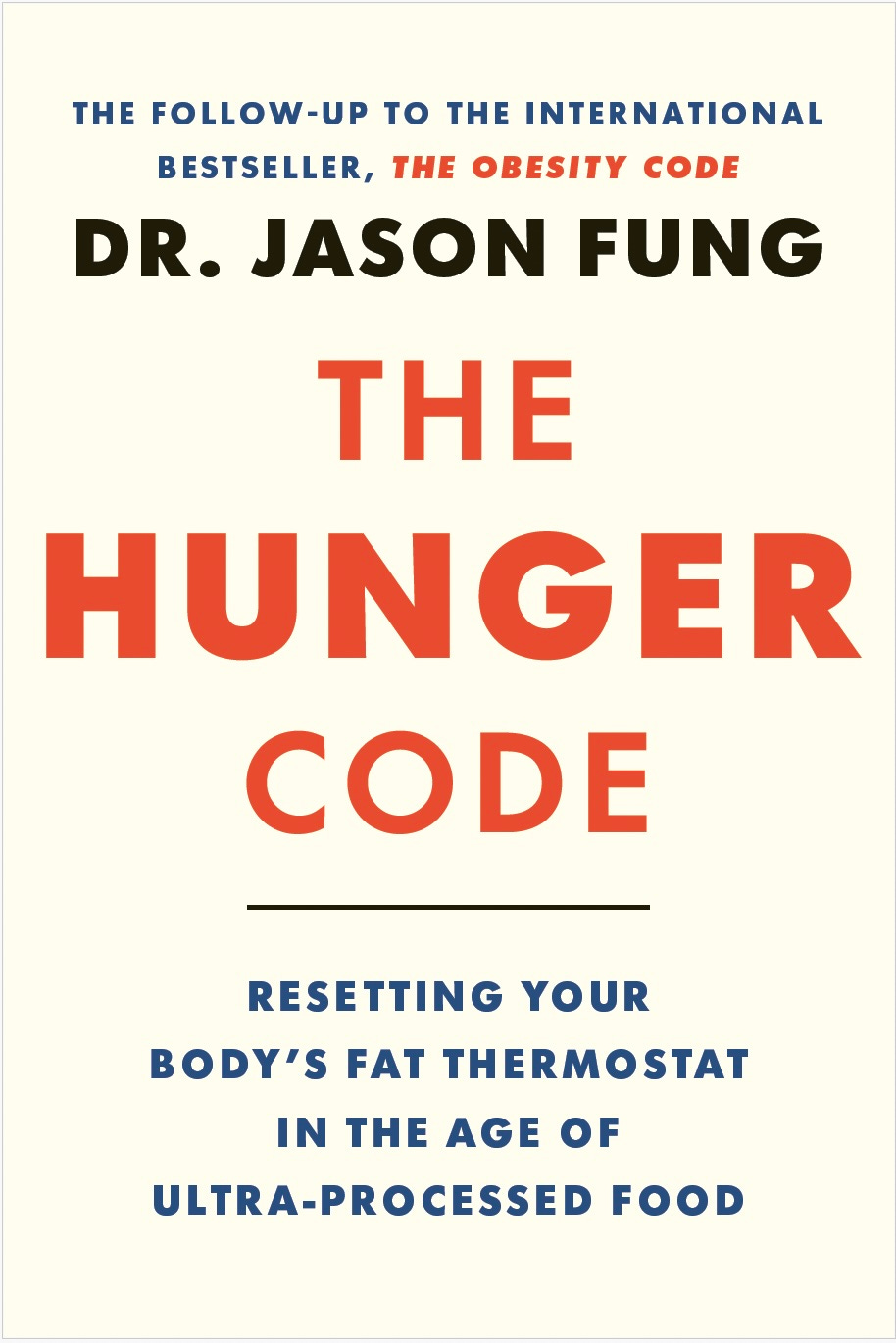
The result is a book that explores the science of eating behavior in plain language. At its core, it asks: if we understand why we feel hungry, can we better control how and what we eat? I believe the answer is yes.
The book includes three simple “Golden Rules” and 50 practical tips for weight loss. But the real heart of it is understanding. When you understand the forces shaping your hunger, you’re no longer fighting blindly against them.
For years, we’ve blamed people for eating too much. Maybe it’s time to understand why they’re hungry. I hope The Hunger Code will help shift that conversation. And I hope it helps many people feel less blame, more clarity, and more control.
Congratulations! Thank you for doing your part to heal our sick population!!
Congratulations on the book launch! The Hunger Code is an apt title, because the real problem most people are trying to solve isn’t “willpower,” it’s decoding what their appetite signals are actually responding to.
What I appreciate in your work (and what I hope this book continues) is the consistent reframing of hunger as biology + environment, not moral failure. When someone understands the different “hunger channels” (homeostatic, hedonic, conditioned/social), they stop fighting themselves and start designing around the signal: meal composition that actually satisfies, fewer engineered cues, and routines that don’t keep the brain in constant negotiation.
Also: launching a book like this right now feels timely. In an ultra-processed food environment, hunger gets hijacked, not because people are weak, but because the stimulus environment is aggressive. A book that helps readers recognize the difference between “my body needs fuel” and “my brain is being prompted” can genuinely change outcomes.
Wishing you a huge release week!