I recently found a better way to get rid of hiccups, and I’ve been a doctor for 30 years
Don't just hold your breath

First, let me say that this is purely anecdotal evidence. I’ve always had problems with hiccups over the years. I’ve tried all the standard solutions — holding my breath, drinking water, drinking water from the opposite side of the glass, letting a teaspoon of sugar dissolve on my tongue and ignoring it. None of them really worked for me.

Second, this applies only to regular hiccups. There are pathologic causes of hiccups which reflect underlying disease, eg. gallbladder abscess. This does not apply.
I can’t even remember where I heard this from, but it worked so well the first time I tried it, I was stunned that I hadn’t ever heard it. I searched online yesterday, and didn’t
What causes hiccups?
Understanding the underlying cause of the situation (the etiology) always leads to more rational therapy. A hiccup is caused by a muscle spasm. In this case the muscle is the diaphragm, which is a main muscle for breathing.
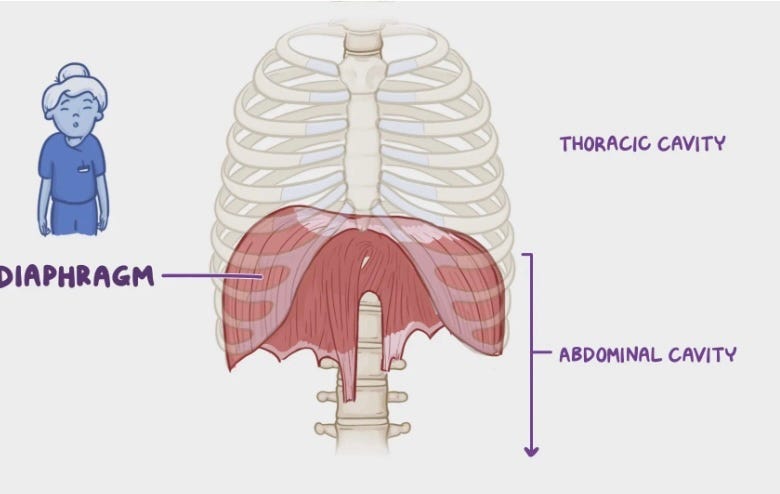
It sits underneath the lungs and pulls the lungs down which sucks air in. The glottis (vocal cord) closes, which makes the ‘hic’ sound.
How to get rid of hiccups
This is only my own personal experience, not to be confused for scientific proof, but it worked very well for me and everybody I’ve told.
Breath deeply and hold your breath. Without exhaling, breath even more air into your lungs. Hold it for 1 second and then once again, without exhaling, try to breathe even more air into the lungs.
Hold this as long as possible. Then exhale as deeply as possible and hold that as long as you can. Repeat if needed.
Why this might work
Remember that a hiccup is a muscle spasm. If you got a cramp in the calf (muscle spasm), what would you do? Stretch it. Obviously.
So if the diaphragm is getting spasms, what would you do? Stretch it. By forcing air into the lungs, I force the diaphragm downwards to stretch and hold. Then the prolonged exhale forces the diaphragm upwards and hold.
I don’t know if this is the real reason it works, but it makes sense to me to treat a hiccup as a muscle spasm since that is what it is.
Magnesium and Vitamin K2
If you continue getting hiccups, then I have also started using magnesium and vitamin K2 supplements. Magnesium supplements have been very useful in my dialysis patients for cramps when given intravenously, and personally, I’ve used magnesium bisglycinate oral supplements for muscle cramps.
The other vitamin that has some evidence in muscle cramps is vitamin K2, as shown in this recent study from JAMA. Since hiccups are basically muscle cramps, both magnesium and vitamin K2 may be beneficial.
Dr. Jason Fung

Online Fasting Community and Coaching
For more, check out my YouTube channel, online community and coaching programs at TheFastingMethod.com and my books
Fascinating to see this elaborated on. I have been utilizing this technique for years, though I had a difficult time explaining it as clearly as you have here. Thank you :D
Exactly what I do, when I get hiccups :)
The sugar and water were home remedies passed on to me by my parents and grandparents, but after understanding the cause, I took to deep breathing and holding my breath.
Never tried prescribing Magnesium though for chronic hiccups...should work, same principle.
Thank you so much for posting this :)