Does Fasting cause Disordered Eating?
No it does not, contrary to popular belief.


Eating disorders such as anorexia nervosa and bulimia, are extremely serious and occasionally fatal diseases. Anorexia nervosa is a psychological condition of distorted body image, where people see themselves as being very overweight, but in truth are dangerously underweight. Because of this problem, they often engage in extreme diets including fasting to lose more weight. In bulimia, people binge and purge. They will eat excessive amounts of food with little or no control. They simply cannot stop themselves. Afterwards, they get rid of the food by purging — usually by self-induced vomiting or laxative abuse. There is often concern that using an intermittent fasting strategy can cause eating disorders. Luckily these concerns are usually misplaced.
Fasting is only a tool. No more. No less.
There are two important points to keep in mind during this discussion. First, fasting is merely a tool — they can help or hurt depending upon the situation. Think about a knife — in the right hands, under the right conditions, a scalpel wielded by a trained surgeon will save your life. But that same blade, used to stab somebody will also kill them. The tool is identical — a knife. By itself the tool is neither good nor bad. Everything depends upon the circumstances.
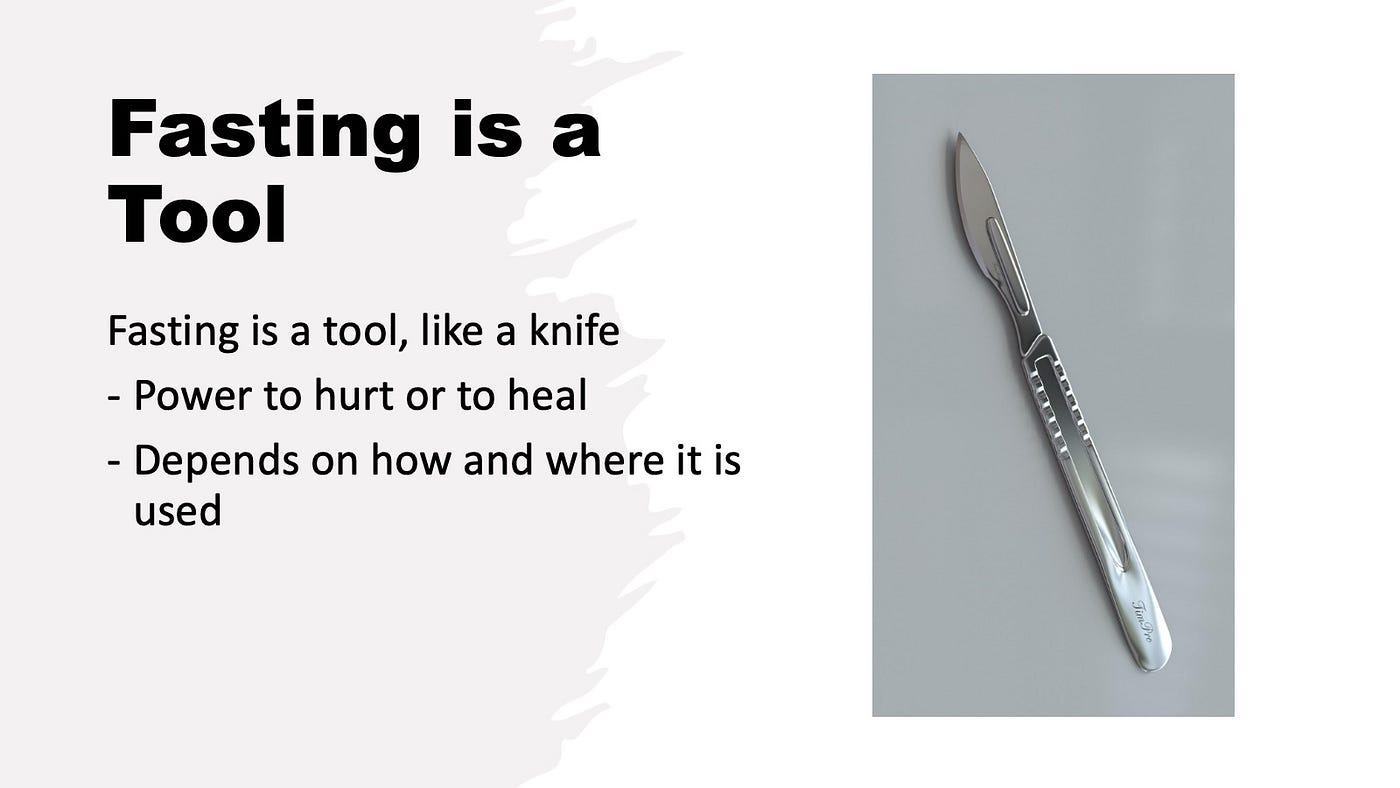
The same holds for fasting. The group of people at highest risk of eating disorders is teenaged girls. In the situation of a underweight, malnourished teenage girl, you would not want to recommend anything close to fasting. It may certainly kill them. There is almost no benefit to fasting. But the situation is very different if you are treating a 60 year old man who weighs 400 pounds and has type 2 diabetes,. His risk of anorexia nervosa is virtually zero, and the weight loss may save his life.
Washing your hands doesn’t cause obsessive compulsive disease.
The second important factor is that a disease may cause a symptom or behavior, which does not mean that behavior causes the disease. There will be an association between the two, but it does not show causation. For example, if you have an infected toe, it will cause a fever, and you will feel cold. But feeling cold does not cause an infection.
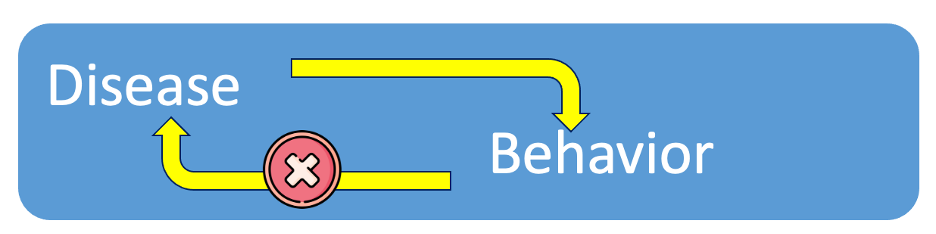
Diseases cause behaviors, but behaviors don’t necessarily cause disease
This is the same thing for obsessive compulsive disorder (OCD) where people feel compelled to wash their hands, for example, even though they know it is irrational. The OCD causes hand washing, but washing your hands does not cause you to have OCD.
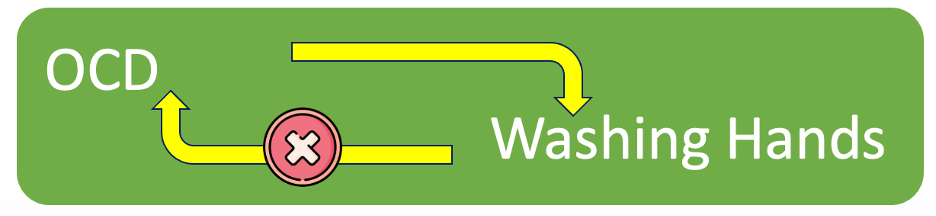
OCD makes you wash hands, but washing hands doesn’t cause OCD
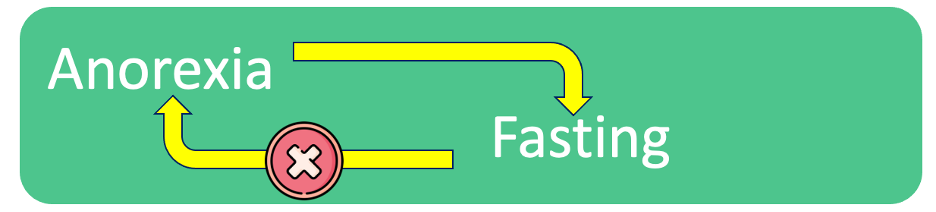
People suffering from anorexia nervosa, a psychological disease of disordered body image, may fast, but fasting does not necessarily cause anorexia nervosa.
There are two main concerns with fasting. First, fasting is a form of food restriction and this may lead to excessive hunger afterwards, leading to excessive eating, or eating foods that are unhealthy. Second, fasting may deplete tryptophans, which are a precursor to the neurotransmitter serotonin, important in reward pathways. So fasting may lead us to overeat afterward due to the loss of pleasure (anhedonia) caused by fasting. Are these concerns legitimate?
Early studies suggested the possibility. A study in 2008 followed a group of adolescent girls aged 11–15 and found that fasting behavior was a marker for disordered eating. But there is a big problem. This does not distinguish between whether eating disordered caused fasting (known to be true) or fasting caused disordered eating. Only a randomized trial can distinguish causality by comparing the effect of an intervention (dieting or fasting) and seeing if this caused the disorder in question.
The randomized trial of dieting versus non-dieting did exactly this and concluded that “Both treatment groups reduced their Binge Eating Scale scores significantly” In other words, dieting did not cause binge eating. This was the same conclusion reached in the study entitled “The psychological consequences of weight gain prevention in healthy, premenopausal women” 535 healthy women were randomly assigned to a lifestyle intervention including dieting, and monitored for negative effects on eating disorders. But they couldn’t find any such problems. Their conclusion was “The current study found no evidence of negative psychological sequelae of participation in a behavioral lifestyle change program”
A study in bulimic patients Trial in bulimic patients titled “Effects of acute food deprivation on eating behavior in eating disorders” concluded that “A period of acute food deprivation did not trigger marked eating pathology as evidenced by overconsumption”. That is, dieting did not trigger eating disorders.
Does fasting cause eating disorders? The evidence suggests not. The study “Effect of an acute fast on energy compensation and feeding behaviour in lean men and women” concluded that “These data suggest that a 36 h fast … did not induce a powerful, unconditioned stimulus to compensate on the subsequent day”. While people did eat a bit more after fasting for 36 hours, they did not eat nearly enough to compensate for the amount they did not eat during fasting.
The most recent study from 2015 suggests a similar safety profile for fasting. The study titled “Does short-term fasting promote pathological eating patterns?” took healthy people (average age 18, average body mass index 24.1), including both men and women, and different ethnicities. After a 24 hour fast, they looked for evidence of disordered eating or overconsumption or binge eating. They did not find any. They concluded definitively that “fasting does not significantly predict increases in ED (eating disordered) behaviors”.
Fasting does not cause eating disorders
The evidence is clear and consistent and allows us to make several important conclusions:
1. Fasting does not cause eating disorders
2. Fasting does not cause excessive overeating (compensation)
3. Fasting is a tool — use only in appropriate conditions (ie. not underweight teenage girls)
For more on fasting, check out my books such as The Obesity Code and The Complete Guide to Fasting. More information on my YouTube Channel.
Dr. Jason Fung

Online Fasting Community and Coaching
For more, check out my YouTube channel, online community and coaching programs at TheFastingMethod.com and my Website & Books
I started fasting systematically upon being dxed with prediabetes about a year and a half ago. It's been extremely beneficial. It's was very hard at first, and it took a lot of experimentation. What works best for me is 1-3 day fasts per week. Occasionally longer.
I gave myself a break over Christmas last, and resumed fasting, but in a new way I had not tried. One day eating, one day not. It was a disaster. I regained all my 15 lbs and my fasting insuling came in worse than several months before. I just ended up eating a lot during the eating days.
I am back on my previous patterns, feeling much better, and slowly losing that bit of padding. I experienced overeating when I tried the 6/18 pattern too. I think each person needs to discover what works for them best.
Fasting is awesome. If Galen had not been so set against fasting, western medicine would have been much farther today than it is.
Well we’re all different and it definitely did that to me. That’s why I never lost any weight on it. I absolutely gorged when I broke my fast and was miserable every minute until it was time to eat. No mental clarity, no lightness, just hunger and a nasty taste in my mouth until I ate food. You couldn’t pay me to IF. I do the normal thing of not eating after dinner, but I don’t delay breakfast. My body is so much happier maintaining a circadian approach to diet. I lost 60 lbs with the miracle of science.